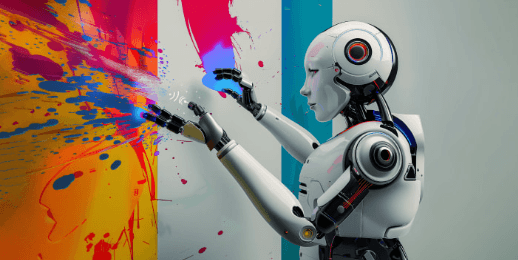
The future of AI-powered creativity tools rests on clear collaboration between humans and machines. These tools should accelerate ideation while preserving agency, with transparent prompts and iterative cycles. Evaluation will weigh capabilities, costs, and fit within workflows. Authorship, provenance, and ethics reviews must be ongoing, guiding responsible use. A disciplined personal workflow will align human judgment with machine suggestions, sustaining quality and diversity. The conversation then turns to how these guardrails shape everyday practice, inviting careful exploration MIGHT reveal.
How AI-Powered Creativity Tools Accelerate Ideation
AI-powered creativity tools streamline ideation by rapidly generating diverse concepts, scaffolding brainstorming sessions, and revealing connections that humans may overlook.
The approach emphasizes transparent processes, documenting assumptions, and respecting user agency.
Through structured prompts and iterative feedback, teams experience ideation acceleration while preserving ownership.
This discipline supports sustainable idea generation, enabling broader creative exploration without surrendering accountability or autonomy to automated systems.
Evaluating Tools: Capabilities, Costs, and Creative Fit
Evaluating tools requires a disciplined, methodical approach: how do capabilities align with project goals, what is the true total cost of ownership, and where does each option fit within the team’s creative workflow?
The assessment remains transparent, principled, and accountable, balancing evaluating tools, capabilities costs, creative fit, and workflow integration to preserve freedom while ensuring pragmatic, rigorous decision-making.
Responsible Collaboration: Authorship, Originality, and Ethics
In responsible collaboration, questions of authorship, originality, and ethics hinge on clear definitions, transparent processes, and principled governance as AI-assisted tools integrate into creative workflows.
The discussion clarifies authorship ethics, assigns accountability, and delineates provenance, ensuring contributors’ intentions align with outcomes.
Organizations address originality concerns through documentation, disclosure, and ongoing evaluation, fostering freedom, trust, and responsible experimentation within shared inventive ecosystems.
Crafting a Personal Workflow for Humans + Machines
How can a creator effectively integrate human judgment with machine assistance to produce consistent, high-quality results? The approach centers on deliberate boundaries and transparent criteria, enabling deliberate iteration. In human machine collaboration, decision points are mapped, quality metrics defined, and feedback loops established. Creative workflow integration balances autonomy with checks, ensuring accountability while preserving freedom to experiment and refine meaningful outcomes.
See also: techedc
Frequently Asked Questions
How Will AI Creativity Tools Affect Jobs Long-Term?
AI creativity tools will reshape jobs gradually, emphasizing new roles and skills; ethical oversight, AI ethics, and transparent practices guide transitions. Collaborative workflows emerge, demanding accountability, foresight, and freedom to pursue innovative, ethically grounded opportunities.
What Are Biases in Ai-Generated Ideas and Outputs?
The sketch shows a skewed compass; satire reveals bias emergence as ideas orbit familiar patterns, while novelty limits confine originality. Bias emergence shapes outputs; novelty limits temper innovation, demanding transparent, principled, accountable critique for a freedom-seeking audience.
Can AI Tools Understand User Intent Beyond Prompts?
AI intent can be inferred beyond prompts through behavior, patterns, and contextual signals, yet remains imperfect; tools strive for transparency, accountability, and user autonomy, recognizing limits while clarifying when interpretations extend beyond user-directed input—Beyond prompts.
How Secure Is Data Shared With Creativity Tools?
Data security varies by tool, but generally, data privacy and data ownership depend on policies, encryption, and access controls; responsible providers disclose practices, ensure user control, and uphold transparency, enabling freedom while maintaining accountability and ethical handling of shared content.
Will AI Replace Human Intuition in the Creative Process?
AI intuition remains a partner, not a replacement; creativity collaboration endures. The system respects data privacy, clarifies user intent, and mitigates bias, while transparent, principled safeguards ensure accountability in a freedom-loving, skeptical audience.
Conclusion
In a quiet workshop where gears hum like careful thoughts, a librarian and an apprentice share a single map. The map glows, showing paths only visible through collaboration: questions spark engines, engines reveal possibilities, and questions return wiser. No trail is claimed alone; every mark carries responsibility. As the sun sets, they ink a promise: tools illuminate, humans steer. The journey remains ours—transparent, accountable, and fueled by ethical curiosity.